
The Cambridge Dictionary has named “human” as its Word of the Year 2026.
The dictionary is published by Cambridge University Press & Assessment, the University of Cambridge’s publishing and assessment business. It says the year has been defined by global debates on what it means to be human, as AI blurs the boundaries between people and machines. The announcement was published by the University of Cambridge on 17 November, adapted from the Cambridge University Press & Assessment website.
Overview
- The Cambridge Dictionary Word of the Year 2026 is “human”.
- The dictionary defines it as “having the qualities, faults, and feelings that people have, as opposed to gods, animals, or machines”.
- It was chosen because of the debate over what being human means in the age of AI.
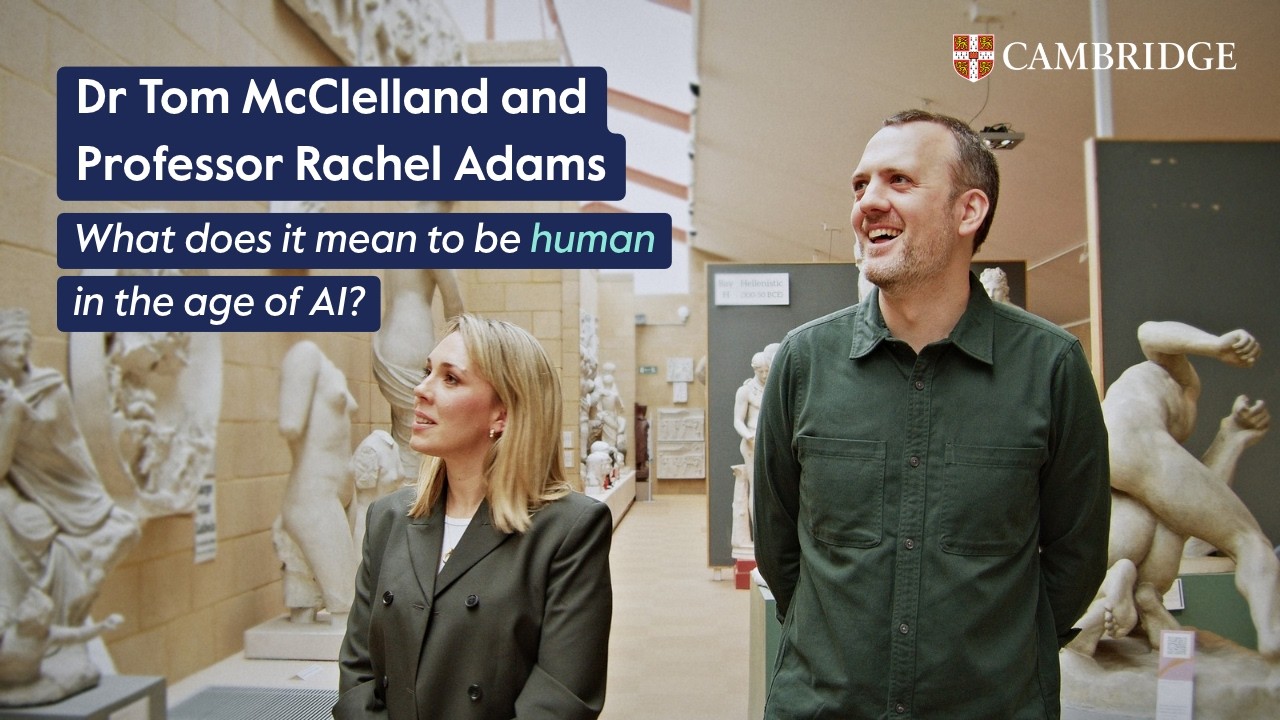
- Two University of Cambridge academics, Professor Rachel Adams and Dr Tom McClelland, gave their views on the choice.
Why ‘human’ was chosen
Lexicographer Colin McIntosh of the Cambridge Dictionary said: “AI is changing how we talk about being human. It’s this renewed interest in the idea of being human that captured the zeitgeist and made ‘human’ the Cambridge Dictionary Word of the Year.”
The announcement points to public figures who spoke up for people over machines this year. They include:
- Bill Gates, Chair of the Gates Foundation, who made the case for “human reserved jobs”, such as caregivers, in an essay
- Geoffrey Hinton, the Nobel laureate often called the “AI godfather”, who warned “we’re creating alien beings”
- the Authors Guild, which launched a “Human Authored” kitemark for books
- Matthew McConaughey and Taylor Swift, who trademarked their voices and images against AI copies
Commenting on the choice, Bill Gates said: “AI is making us think harder about what it means to be human.” He added: “The measure of AI’s success should be how much it improves human lives.”
What Cambridge academics said
Professor Rachel Adams is an expert on AI governance and human rights at the University of Cambridge. She said: “AI brings us back to questions that we’ve asked for millennia: who are we, what does it mean to be human? The answer to these questions has never been fixed or stable, but the act of asking it is something we have in common.”
She added: “AI is going to be a profound test for humanity. There’s a real risk that it deepens existing inequalities, but it also has the potential to solve them.”
Dr Tom McClelland is a philosopher of science at the University of Cambridge. He said: “I think ‘human’ is a really interesting choice because right now our understanding of humanity is changing.”
He had advice for young people: “All the rhetoric around AI is about what’s inevitably going to happen. But to young people growing up in an AI-enabled world, my advice would be that nothing is inevitable. What happens in the future of AI is up to us. It’s up to you.”
The Cambridge Dictionary released a short film with the announcement.
What it means for you
The Cambridge Dictionary is free to use online at dictionary.cambridge.org, where the full entry for “human” sits. The word of the year has no practical effect on anything you do. It is the dictionary’s own record of the word that, in its editors’ view, best sums up 2026.
Have your say