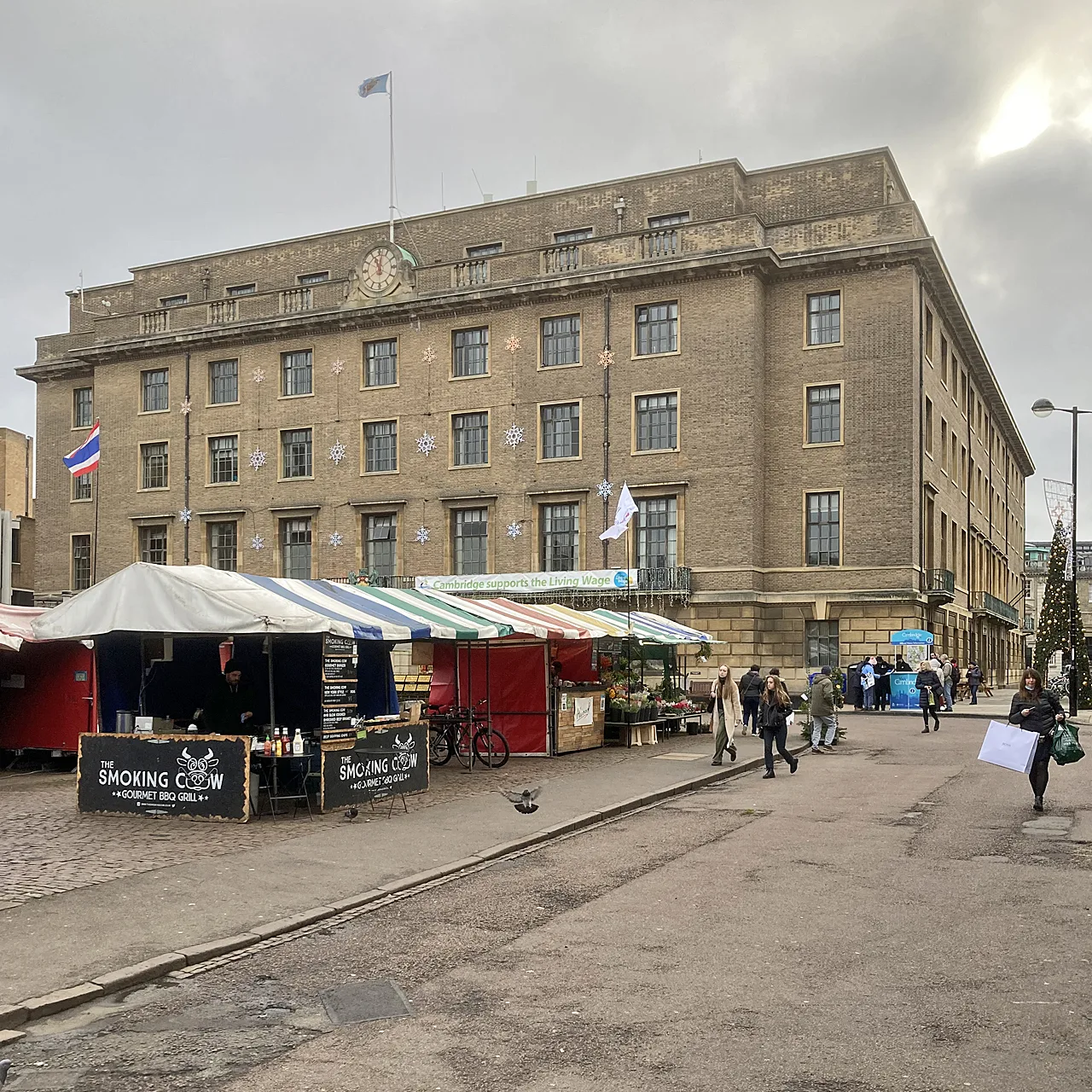

Cabinet chose the full Civic Quarter scheme, keeping the Guildhall for council use. Full Council votes on £86.88m of new spending on 26 November.
The Cambridge Guildhall will not be sold if the city council’s Cabinet gets its way. On Monday 16 November it unanimously chose the full Civic Quarter scheme, which refurbishes the Guildhall and moves council staff back into it, with about 150 workspaces.
The choice is set out in the council’s published decision, issued on 18 November. It is not final. Cabinet can choose the option, but the money has to be approved by Full Council. That vote is on Thursday 26 November.
What Cabinet decided
Cabinet had four options in front of it, which we set out when the Guildhall sale went on the table in October. It picked option 1, the full scheme with the cost savings officers had found.
The decision also:
- recommends that Full Council approves £86.88m of new capital spending for the scheme
- lets officers sell or lease Mandela House, the Regent Street office where staff work now
- lets officers sign contracts with the builder, SRM, within the approved budget
- notes “an anticipated start on site in early 2027”
Option 3, putting off the Guildhall decision until a new unitary council takes over, was called “a plausible option” in the decision. It was not recommended. The decision says waiting risks higher building costs and a worse building. The current planning permission also expires in 2029.
What it costs and who carries the risk
The Cabinet report puts the whole project at £95.7m, after £13.7m of savings. The biggest single saving is dropping the EnerPhit low-energy standard for the Guildhall, worth about £2.5m.
Over 30 years the scheme would cost the council’s day-to-day budget about £8.5m, on the report’s figures. The losses come early and the surpluses later.
To cover that, the council plans to use money from the Park Street hotel. The report says the hotel has been let on a 30-year lease at £3.8m a year, against £1.9m in the budget. The plan is:
- the extra £1.9m for 2026/27 and 2027/28 goes into a reserve for early losses
- half of the extra income from 2028/29 supports the Civic Quarter for a further 15 years
- the other half goes to the council’s general savings target
The council’s finance chief warned in the decision that the figures rest on “a number of significant modelling assumptions”. The risks named are building costs running over, higher interest rates, and lower rent from the Guildhall’s commercial space or lower takings at the Corn Exchange. If those come true, “the council may need to seek additional General Fund savings in the future”, the decision says. Cabinet agreed monthly cost reports and a separate contingency reserve.
When the work would happen
The report’s timetable, if Full Council agrees:
| Stage | Date |
|---|---|
| Last events in the Guildhall halls | End of December 2026 |
| Corn Exchange moved out | Mid-January 2027 |
| Building work starts | January 2027 |
| Market traders moved to temporary stalls | March 2027 at the earliest |
| Market Square finished | March 2028 |
| Corn Exchange reopens | Summer 2028 |
| Guildhall finished | December 2028 |
| Public spaces finished | August 2029 |
The last show at the Corn Exchange before it closes is on 31 December 2026, the report says.
What happens on 26 November
Full Council meets at 6pm on Thursday 26 November. The agenda gives the venue as the Council Chamber at the Guildhall, entered from Peashill. The meeting is public, though councillors may go into private session to discuss the confidential appendices.
The same agenda carries a petition asking the council to keep the Tourist Information Centre in the refurbished Guildhall.
Cabinet’s decision can be called in by councillors before it takes effect on 24 November. The council’s register showed no call-ins on 20 November.
What it means for you
- The Guildhall stays in public hands under this choice, with a public café and open ground floor in the plans. Nothing is final until Full Council approves the money.
- The Corn Exchange closes after New Year’s Eve for about 18 months. Our story on Corn Exchange ticket prices sets out what the council’s model expects shows to cost when it reopens.
- The market moves to temporary stalls from spring 2027. The planning application for those is covered in our story on the temporary market streets.
- You can go to the vote. Full Council is at 6pm on 26 November, and anyone can attend the public part.
Have your say