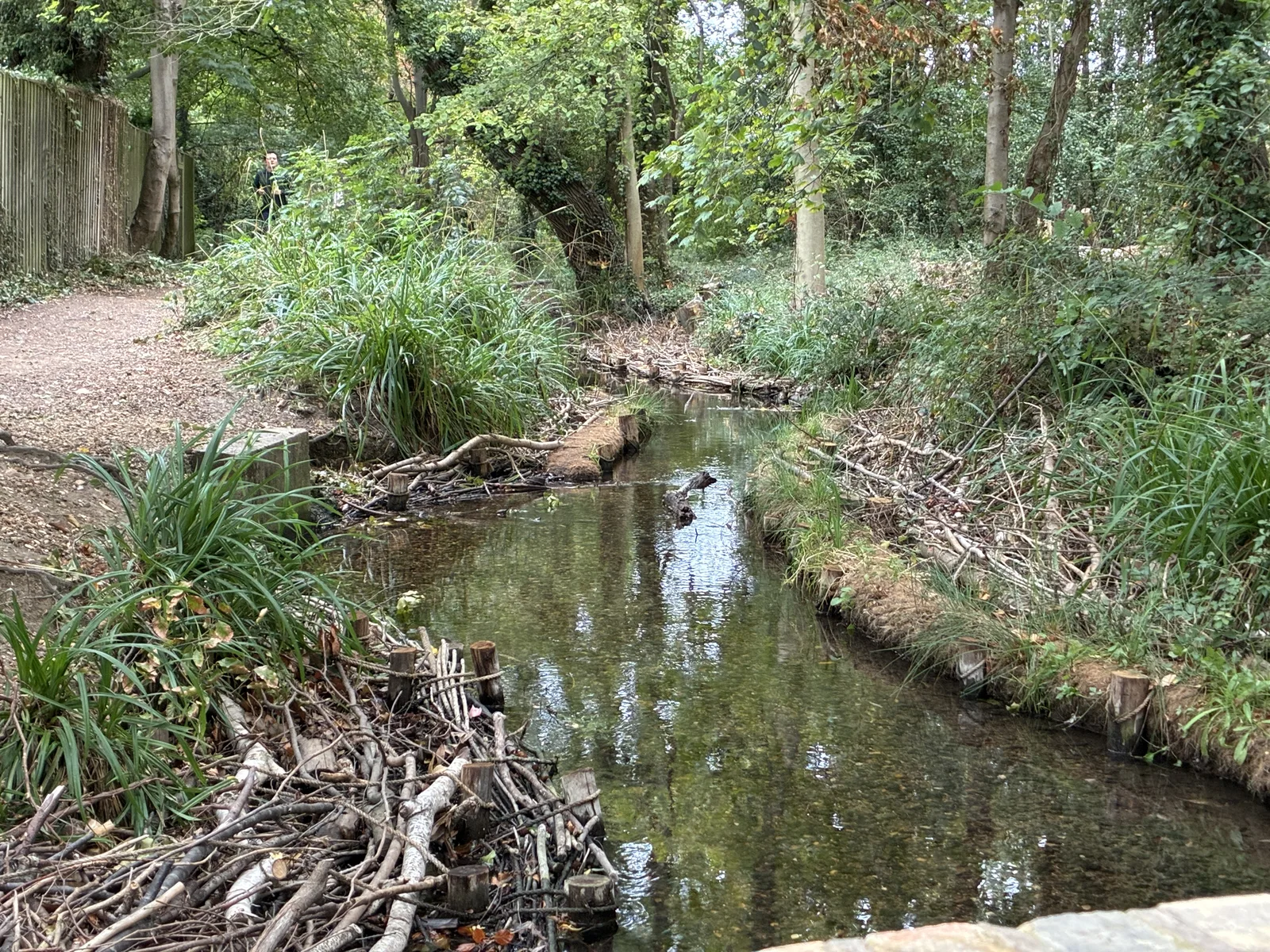

Surveyors are mapping every pipe and drain running into five Cambridge chalk streams, Hobson's Brook among them. A £1.9m project behind it launches in December.
Surveyors are walking five of Cambridge’s chalk streams from their springs to the River Cam, recording every pipe, culvert and drain that empties into them. The aim is to find out where the pollution in the city’s brooks is coming from.
Cambridge City Council announced the work on 13 November. It is the first stage of the Cambridge City Chalk Stream Project, which the council says will be officially launched in December.
Which streams are being surveyed
The council’s release names five watercourses:
- Cherry Hinton Brook
- Coldham’s Brook
- the East Cambridge Main Drain
- Hobson’s Brook
- Vicar’s Brook
Each is being followed from its springhead to the point where it joins the Cam.
What the surveyors are looking for
The first job is a map. The surveyors are logging every visible outfall and drainage connection: pipes, culverts, surface water drains, ditches and other discharge points. The council says this will give it a full list of the routes by which water, and whatever it carries, gets into the streams from roads, housing and industrial areas.
Alongside the map, the council is sampling both the water and the sediment on the stream beds. The tests look for pollutants that wash off a city, including:
- heavy metals
- hydrocarbons, such as fuel and oil residues
- chemicals from tyre wear
- other organic contaminants
Sediment matters because some pollutants settle and build up there. The council says that can undo the benefit of restoring a stream’s banks and channel if the source is never dealt with.
What happens with the results
The evidence will be used to design fixes at the points where polluted runoff enters the streams. The council lists constructed wetlands, planted drainage features and systems that trap sediment before it reaches the water.
Cllr Martin Smart, the council’s cabinet member for nature, open spaces and city services, said the point was “moving beyond simply identifying poor water quality”. He said: “We want to understand the sources and pathways of pollution, investigate the contaminants that may be affecting aquatic life and use this scientific evidence to develop effective solutions.”
Who is paying
The project is a partnership between the city council and Cambridge Water. It has up to £1.9m from Cambridge Water’s Water Industry National Environment Programme, the scheme through which water companies fund environmental work agreed with regulators. It follows on from the earlier Greater Cambridge Chalk Stream Project.
What it means for you
Chalk streams are fed by groundwater from the chalk beneath the city. They are rare: the council calls them among the most valuable and sensitive freshwater habitats there are, and the five being surveyed run through parks and neighbourhoods across the south and east of the city.
Nothing changes on the ground yet. The surveys collect evidence; the work to intercept pollution comes later, and the council has not given dates or locations for it.
If you see pollution in a Cambridge brook now, such as an oily sheen, discoloured water or dead fish, the Environment Agency’s 24-hour incident line is 0800 80 70 60. Its reporting page explains what to tell it.
Have your say